
Boys & Girls Clubs of Broward County

DONATE

Parent Resources

Social Media & Youth:
What Parents Need to Know by Age

In today’s digital world, social media is part of how young people connect, learn, and express themselves. But one of the most common questions parents/caregivers ask is:

“What age is appropriate for social media—and how do I guide my child through it?”

The answer isn’t one-size-fits-all. It requires understanding how social media impacts children at different stages of development—and how parents can lead with awareness, balance, and intention.

⚖️ The Balance: Social Media Isn’t All Good or All Bad

Social Media Can:

✓ Build connection and reduce loneliness

✓ Provide access to resources and support

✓ Encourage creativity and self-expression

But It Can Also:

⚠️ Increase anxiety and lower self-esteem ([Child Mind Institute][10])

⚠️ Impact sleep, focus, and academic performance ([Atlantic Health][11])

⚠️ Lead to excessive or addictive use patterns

The key isn’t elimination—it’s intentional use and guidance.

📊 The Reality: Social Media Starts Earlier Than You Think

Research shows that social media use begins well before the recommended age:

* The average age child starts using social media is 12.6 years old([NCBI][1])

* Nearly 40% of children ages 8–12 are already using social media ([Johns Hopkins Medicine][2])

* Among teens ages 13–17, up to 95% use social media, with many online “almost constantly” ([NCBI][3])

* About 7 in 10 teens visit platforms like YouTube daily, and more than half use TikTok every day ([Pew Research Center][4])

Despite most platforms requiring users to be at least 13 years old, access is often easy—and early exposure is now the norm.

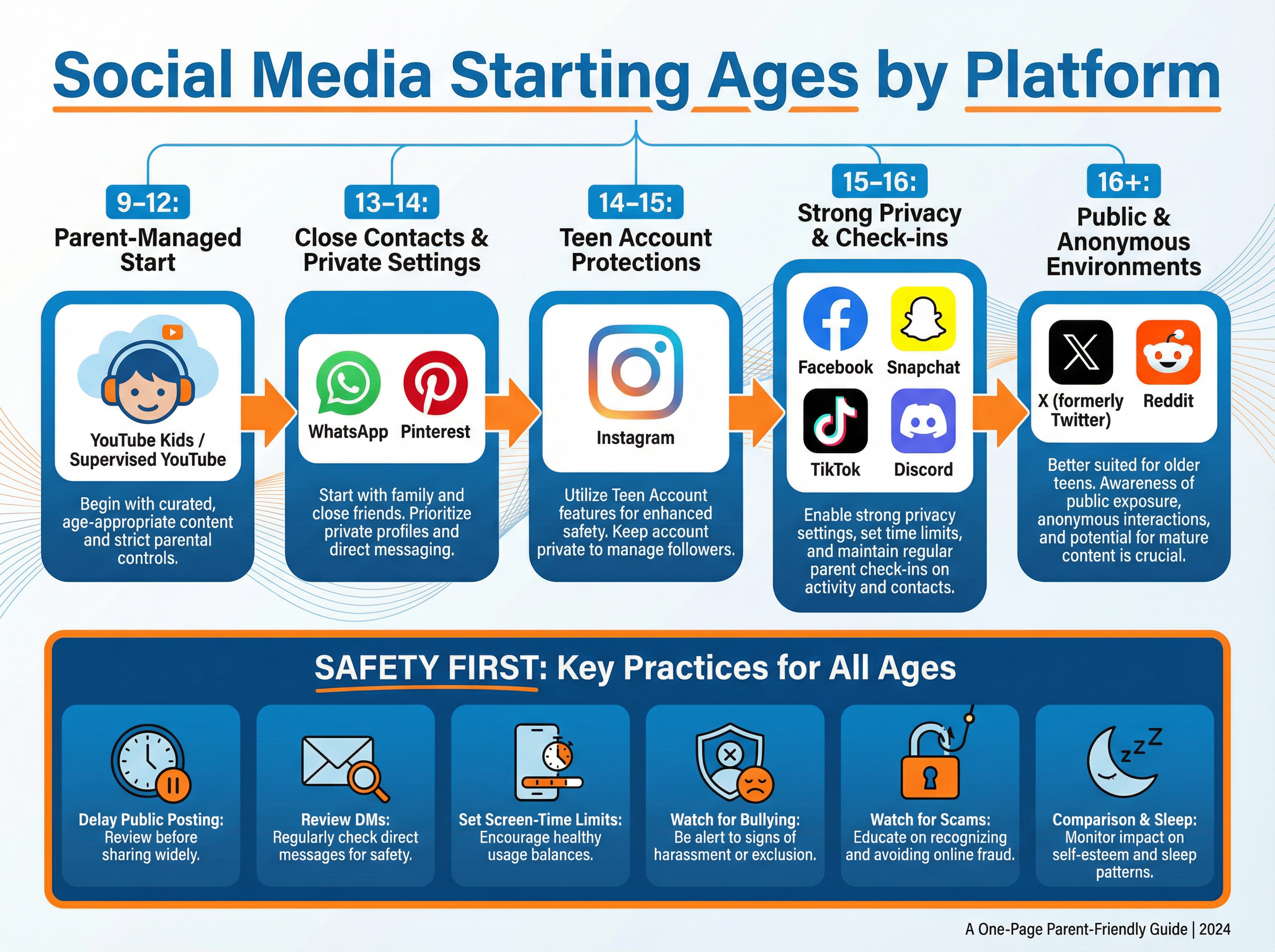
👶 Ages 8–12 (Tweens): Early Exposure & High Curiosity

What’s happening:

* Many tweens are already exploring platforms like YouTube and TikTok

* Social media is often introduced through friends, siblings, or shared devices

* Curiosity is high, but emotional maturity is still developing

Risks to be aware of:

* Exposure to inappropriate content

* Difficulty distinguishing reality vs. curated content

* Increased screen time habits forming early

Parental recommendations:

* Delay personal social media accounts when possible (13+ is the general guideline) ([Wee Care Pediatrics][5])

* Use shared accounts or supervised access

* Set clear screen time boundaries

* Begin conversations about **online safety and digital kindness**

👉 At this stage, guidance matters more than restriction alone

🧑‍🎓 Ages 13–15 (Early Teens): Identity & Influence

What’s happening:

* Social media becomes central to friendships and identity

* Platform use increases significantly (Instagram, Snapchat, TikTok)

* Peer validation (likes, comments) starts to impact self-esteem

What research shows:

* Teens increasingly report being online **“almost constantly”** ([NCBI][3])

* About **48% of teens say social media negatively impacts people their age** ([Pew Research Center][6])

Risks to be aware of:

* Comparison culture and body image concerns

* Cyberbullying

* Sleep disruption from late-night use

Parental recommendations:

* Keep an open dialogue—not just rules

* Monitor usage, but focus on **trust and communication**

* Encourage tech-free times (especially before bed)

* Teach critical thinking: “What am I seeing, and is it real?”

👉 This is the stage where confidence and identity are most influenced by digital spaces.

🎓 Ages 16–17 (Older Teens): Independence & Responsibility

What’s happening:

* Social media becomes a tool for self-expression, networking, and even career exploration

* Usage is highest among this age group

What research shows:

* Older teens are more likely to use platforms like Instagram and Snapchat than younger teens ([Pew Research Center][7])

* Teens spend **an average of 4+ hours daily on social media** ([The REACH Institute][8])

Benefits to recognize:

* Connection with peers and communities

* Access to information, opportunities, and causes

* Creative expression and skill-building ([PMC][9])

Parental recommendations:

* Shift from control to **coaching and accountability**

* Discuss digital footprint and long-term impact

* Encourage balance: offline relationships, activities, and goals

* Support positive uses (learning, advocacy, creativity)

👉 At this stage, the goal is to prepare—not protect—so teens can navigate responsibly.

💡 Final Thoughts for Parents

At Boys & Girls Clubs of Broward County, we believe in empowering youth and parents with the tools, confidence, and support they need to thrive—online and offline.

Here’s what matters most:

Parents should be encouraged to start conversations early (before social media starts)

  • Stay involved, not intrusive
  • Model healthy behavior with your own screen use
  • Focus on values:—respect, kindness, confidence, and self-worth

Because at the end of the day, social media is just a tool.

How our children use it—and how we guide them—makes all the difference.

Click the link above and follow our parent-friendly guide to using Parental Controls on iOS and Android to set and monitor screen time; a step-by-step instructions for iPhones/iPads and Android devices, plus a few tips to make the rules stick.